
The complete beginner-to-intermediate Spanish grammar course, one YouTube video per lesson, each with a written guide, tables and a quiz. Start at lesson 1 or jump to the topic you need.
Ser, estar, tener and poder: the four verbs every Spanish sentence needs, with conjugation tables, examples and a video lesson for each. Read the spanish verbs guide →
 2:18
Lesson 01 · A1
SER Conjugation: Master the Spanish "To Be" in Every Tense
Ser means "to be" for identity, origin, profession, characteristics, time and date. Present tense: soy, eres, es,…
2:18
Lesson 01 · A1
SER Conjugation: Master the Spanish "To Be" in Every Tense
Ser means "to be" for identity, origin, profession, characteristics, time and date. Present tense: soy, eres, es,…
 2:41
Lesson 02 · A1
Ser vs Estar: the Spanish "to be," finally explained
Ser defines what something is: identity, origin, profession, characteristics, time (soy profesor, es la una). Estar…
2:41
Lesson 02 · A1
Ser vs Estar: the Spanish "to be," finally explained
Ser defines what something is: identity, origin, profession, characteristics, time (soy profesor, es la una). Estar…
 5:07
Lesson 10 · A1
Tener conjugation: how to say 'to have' in Spanish (and much more)
Tener means 'to have', and its present tense is tengo, tienes, tiene, tenemos, tenéis, tienen. Spanish also uses tener…
5:07
Lesson 10 · A1
Tener conjugation: how to say 'to have' in Spanish (and much more)
Tener means 'to have', and its present tense is tengo, tienes, tiene, tenemos, tenéis, tienen. Spanish also uses tener…
 4:01
Lesson 15 · A2
Poder conjugation: how to say 'can' in Spanish in every tense
Poder means 'can' or 'to be able to' and is always followed by an infinitive. In the present tense the stem changes o →…
4:01
Lesson 15 · A2
Poder conjugation: how to say 'can' in Spanish in every tense
Poder means 'can' or 'to be able to' and is always followed by an infinitive. In the present tense the stem changes o →…
Present, progressive, future, ir a, future continuous, conditional and future perfect: the Spanish tenses that carry a conversation, one video each. Read the spanish tenses guide →
 2:46
Lesson 03 · A1
Spanish present tense: -ar, -er, -ir endings, model verbs and uses
The Spanish present tense describes habits, facts, what is happening now and near-future plans. To form it, drop the…
2:46
Lesson 03 · A1
Spanish present tense: -ar, -er, -ir endings, model verbs and uses
The Spanish present tense describes habits, facts, what is happening now and near-future plans. To form it, drop the…
 4:19
Lesson 04 · A1
Present progressive in Spanish: estar + gerundio (-ando, -iendo)
The present progressive in Spanish is estar (estoy, estás, está, estamos, estáis, están) plus a gerund: -ando for -ar…
4:19
Lesson 04 · A1
Present progressive in Spanish: estar + gerundio (-ando, -iendo)
The present progressive in Spanish is estar (estoy, estás, está, estamos, estáis, están) plus a gerund: -ando for -ar…
 4:05
Lesson 06 · A2
Spanish Future Tense: Talk About the Future the Easy Way
The Spanish future tense is formed by adding -é, -ás, -á, -emos, -éis, -án to the whole infinitive: hablaré, comeré,…
4:05
Lesson 06 · A2
Spanish Future Tense: Talk About the Future the Easy Way
The Spanish future tense is formed by adding -é, -ás, -á, -emos, -éis, -án to the whole infinitive: hablaré, comeré,…
 4:20
Lesson 07 · A1
Ir a in Spanish: how to say going to with ir a + infinitive
Ir a in Spanish means 'going to'. Conjugate ir in the present (voy, vas, va, vamos, vais, van), add a, then any…
4:20
Lesson 07 · A1
Ir a in Spanish: how to say going to with ir a + infinitive
Ir a in Spanish means 'going to'. Conjugate ir in the present (voy, vas, va, vamos, vais, van), add a, then any…
 4:17
Lesson 08 · B1
Future continuous in Spanish: estaré + gerundio (will be doing)
The future continuous in Spanish is estar in the future (estaré, estarás, estará, estaremos, estaréis, estarán) plus a…
4:17
Lesson 08 · B1
Future continuous in Spanish: estaré + gerundio (will be doing)
The future continuous in Spanish is estar in the future (estaré, estarás, estará, estaremos, estaréis, estarán) plus a…
 3:49
Lesson 09 · B1
Spanish conditional tense: endings, irregular stems and how to say would
The Spanish conditional tense means 'would'. Add -ía, -ías, -ía, -íamos, -íais, -ían to the whole infinitive: hablaría,…
3:49
Lesson 09 · B1
Spanish conditional tense: endings, irregular stems and how to say would
The Spanish conditional tense means 'would'. Add -ía, -ías, -ía, -íamos, -íais, -ían to the whole infinitive: hablaría,…
 4:29
Lesson 32 · B2
Spanish future perfect: habré + participle for will have done
The Spanish future perfect is haber in the future (habré, habrás, habrá, habremos, habréis, habrán) plus a past…
4:29
Lesson 32 · B2
Spanish future perfect: habré + participle for will have done
The Spanish future perfect is haber in the future (habré, habrás, habrá, habremos, habréis, habrán) plus a past…
Preterite, imperfect, present perfect, past perfect and past perfect continuous: how the Spanish past tenses fit together, with tables and video lessons. Read the past tenses guide →
 7:11
Lesson 05 · A2
Spanish Preterite Tense: The Complete Beginner Guide
The Spanish preterite is the past tense for completed actions with a clear start and end: ayer comí tacos (yesterday I…
7:11
Lesson 05 · A2
Spanish Preterite Tense: The Complete Beginner Guide
The Spanish preterite is the past tense for completed actions with a clear start and end: ayer comí tacos (yesterday I…
 6:03
Lesson 31 · A2
Spanish Imperfect Tense: How to Say "Used To" in Spanish
The Spanish imperfect describes past habits, background, descriptions and ongoing actions with no clear end: vivíamos…
6:03
Lesson 31 · A2
Spanish Imperfect Tense: How to Say "Used To" in Spanish
The Spanish imperfect describes past habits, background, descriptions and ongoing actions with no clear end: vivíamos…
 5:36
Lesson 11 · A2
Spanish present perfect: haber + participle and 'have you ever' explained
The Spanish present perfect is formed with the present tense of haber (he, has, ha, hemos, habéis, han) plus a past…
5:36
Lesson 11 · A2
Spanish present perfect: haber + participle and 'have you ever' explained
The Spanish present perfect is formed with the present tense of haber (he, has, ha, hemos, habéis, han) plus a past…
 3:27
Lesson 13 · B1
Spanish past perfect: había + participle, the past before the past
The Spanish past perfect (pluscuamperfecto) is formed with the imperfect of haber (había, habías, había, habíamos,…
3:27
Lesson 13 · B1
Spanish past perfect: había + participle, the past before the past
The Spanish past perfect (pluscuamperfecto) is formed with the imperfect of haber (había, habías, había, habíamos,…
 4:06
Lesson 14 · B2
Past perfect continuous in Spanish: había estado + gerund explained
The past perfect continuous in Spanish is formed with había (the imperfect of haber) + estado + a gerund (-ando /…
4:06
Lesson 14 · B2
Past perfect continuous in Spanish: había estado + gerund explained
The past perfect continuous in Spanish is formed with había (the imperfect of haber) + estado + a gerund (-ando /…
Can, could, may, might, should and must in Spanish: poder, podría, puede que, debería and tener que, explained one video lesson at a time. Read the modal verbs guide →
4:01
Lesson 15 · A2
Poder conjugation: how to say 'can' in Spanish in every tense
Poder means 'can' or 'to be able to' and is always followed by an infinitive. In the present tense the stem changes o →…
 4:17
Lesson 16 · B1
Could in Spanish: podía, pude or podría?
To say could in Spanish, use the verb poder in one of three tenses. Podía (imperfect) is past ability: de niña podía…
4:17
Lesson 16 · B1
Could in Spanish: podía, pude or podría?
To say could in Spanish, use the verb poder in one of three tenses. Podía (imperfect) is past ability: de niña podía…
 4:29
Lesson 17 · B1
May in Spanish: permission, possibility and wishes
There is no single word for may in Spanish. For permission, use poder: ¿Puedo entrar? (May I come in?). For…
4:29
Lesson 17 · B1
May in Spanish: permission, possibility and wishes
There is no single word for may in Spanish. For permission, use poder: ¿Puedo entrar? (May I come in?). For…
 2:28
Lesson 18 · B1
Might in Spanish: quizás, tal vez, puede que or podría?
To say might in Spanish, put a doubt word before the verb: quizás or tal vez (usually subjunctive), puede que (always…
2:28
Lesson 18 · B1
Might in Spanish: quizás, tal vez, puede que or podría?
To say might in Spanish, put a doubt word before the verb: quizás or tal vez (usually subjunctive), puede que (always…
 3:04
Lesson 19 · B1
Should in Spanish: debería, deber and tener que explained
To say should in Spanish, use debería (the conditional of deber) plus an infinitive: deberías descansar (you should…
3:04
Lesson 19 · B1
Should in Spanish: debería, deber and tener que explained
To say should in Spanish, use debería (the conditional of deber) plus an infinitive: deberías descansar (you should…
 4:13
Lesson 20 · B1
Must in Spanish: tener que, deber or hay que?
To say must in Spanish, use tener que plus an infinitive for everyday obligation (tengo que trabajar, I must work),…
4:13
Lesson 20 · B1
Must in Spanish: tener que, deber or hay que?
To say must in Spanish, use tener que plus an infinitive for everyday obligation (tengo que trabajar, I must work),…
Articles, possessives, object pronouns and question words: the small words of basic Spanish grammar, with tables and a video lesson for each. Read the grammar basics guide →
 3:27
Lesson 22 · A1
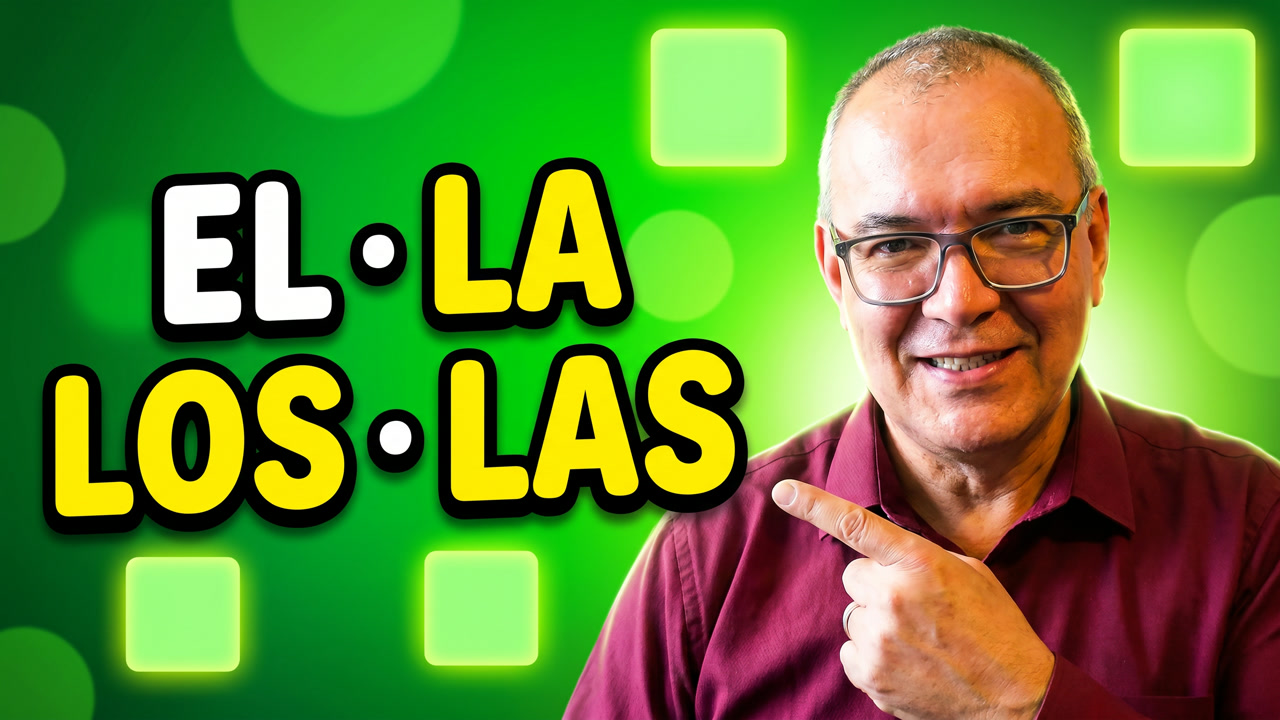
Spanish definite articles: el, la, los, las and when to use them
Spanish definite articles are el (masculine singular), la (feminine singular), los (masculine plural) and las (feminine…
3:27
Lesson 22 · A1
Spanish definite articles: el, la, los, las and when to use them
Spanish definite articles are el (masculine singular), la (feminine singular), los (masculine plural) and las (feminine…
 5:50
Lesson 23 · A1
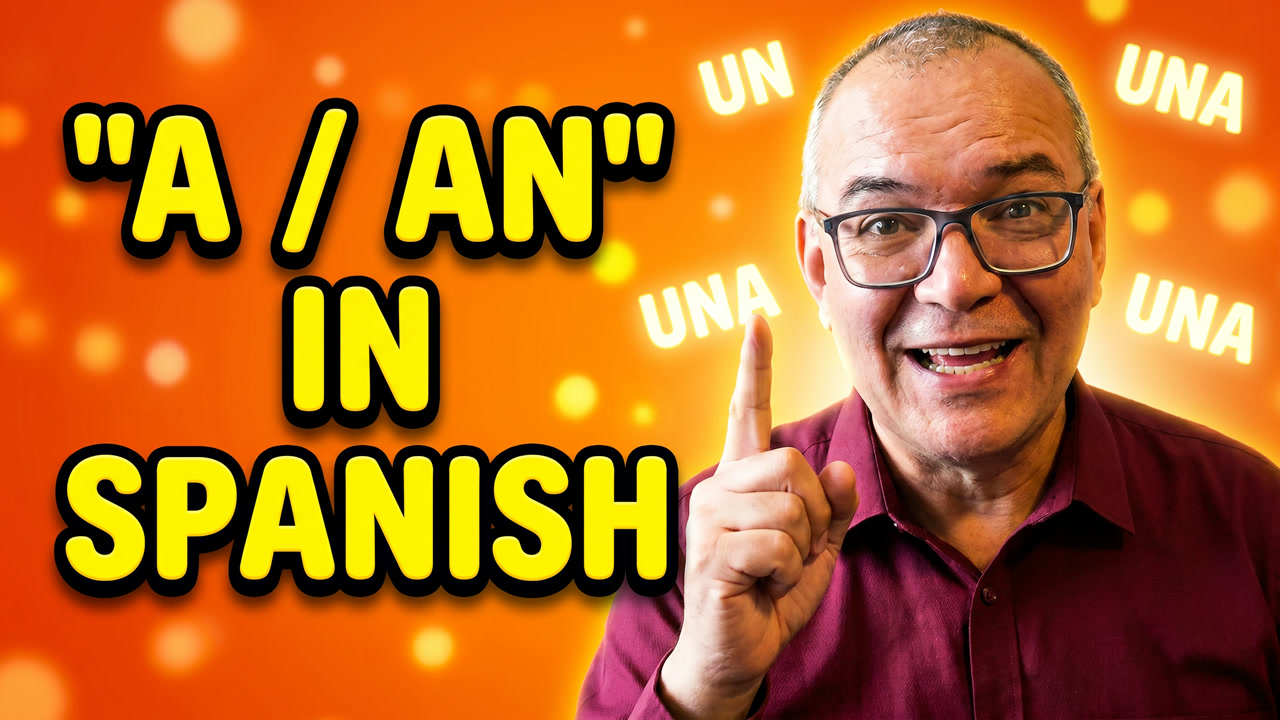
Spanish indefinite articles: un, una, unos, unas (and when to drop them)
Spanish indefinite articles are un (masculine singular), una (feminine singular), unos and unas (plural: some, a few,…
5:50
Lesson 23 · A1
Spanish indefinite articles: un, una, unos, unas (and when to drop them)
Spanish indefinite articles are un (masculine singular), una (feminine singular), unos and unas (plural: some, a few,…
 9:25
Lesson 25 · A1
Spanish possessive adjectives: mi, tu, su, nuestro and how they agree
Spanish possessive adjectives are mi, tu, su, nuestro, vuestro and su. They go before the noun and agree with the thing…
9:25
Lesson 25 · A1
Spanish possessive adjectives: mi, tu, su, nuestro and how they agree
Spanish possessive adjectives are mi, tu, su, nuestro, vuestro and su. They go before the noun and agree with the thing…
 3:45
Lesson 24 · A2
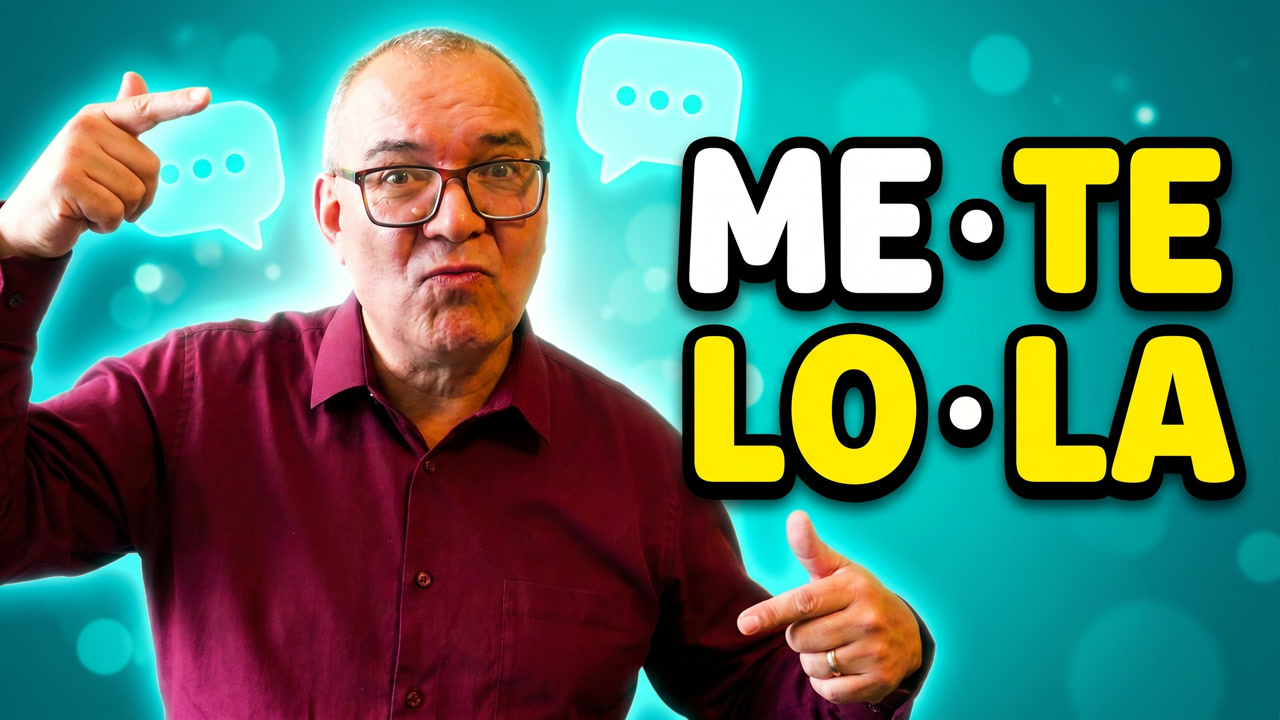
Spanish object pronouns: direct, indirect, placement and se lo
Spanish object pronouns replace the person or thing that receives the action. Direct: me, te, lo, la, nos, os, los,…
3:45
Lesson 24 · A2
Spanish object pronouns: direct, indirect, placement and se lo
Spanish object pronouns replace the person or thing that receives the action. Direct: me, te, lo, la, nos, os, los,…
 4:15
Lesson 21 · A1
Spanish question words: qué, quién, dónde, cuándo, cómo, cuánto, por qué
Spanish question words are qué (what), quién (who), cuál (which), dónde (where), cuándo (when), cómo (how), cuánto (how…
4:15
Lesson 21 · A1
Spanish question words: qué, quién, dónde, cuándo, cómo, cuánto, por qué
Spanish question words are qué (what), quién (who), cuál (which), dónde (where), cuándo (when), cómo (how), cuánto (how…
Spanish prepositions by the question they answer: where (en, sobre), when (a, de, por), how (con, sin), and how long (desde, hace, llevar). Read the prepositions guide →
 4:13
Lesson 28 · A2
Spanish prepositions of place: en, sobre, debajo de, entre and more
Spanish prepositions of place say where something is: en (in, on, at), sobre or encima de (on top of), debajo de…
4:13
Lesson 28 · A2
Spanish prepositions of place: en, sobre, debajo de, entre and more
Spanish prepositions of place say where something is: en (in, on, at), sobre or encima de (on top of), debajo de…
 4:06
Lesson 27 · A2
Spanish prepositions of time: a, de, en, por, durante, desde and hasta
Spanish prepositions of time: a for clock times (a las tres), de after a clock time (de la mañana), en for months,…
4:06
Lesson 27 · A2
Spanish prepositions of time: a, de, en, por, durante, desde and hasta
Spanish prepositions of time: a for clock times (a las tres), de after a clock time (de la mañana), en for months,…
 2:41
Lesson 26 · A2
Spanish prepositions of manner: con, sin, según, como and set phrases
Spanish prepositions of manner describe how an action is done. Con + noun (con cuidado, carefully) and sin (sin prisa,…
2:41
Lesson 26 · A2
Spanish prepositions of manner: con, sin, según, como and set phrases
Spanish prepositions of manner describe how an action is done. Con + noun (con cuidado, carefully) and sin (sin prisa,…
 4:28
Lesson 29 · B1
How long in Spanish: cuánto tiempo, desde cuándo and llevar + gerund
To ask how long in Spanish, start with ¿Cuánto tiempo…? For a duration that continues to now, use ¿Cuánto tiempo hace…
4:28
Lesson 29 · B1
How long in Spanish: cuánto tiempo, desde cuándo and llevar + gerund
To ask how long in Spanish, start with ¿Cuánto tiempo…? For a duration that continues to now, use ¿Cuánto tiempo hace…
 4:31
Lesson 30 · B1
Since and for in Spanish: desde, desde hace, hace…que, durante and por
Since = desde + a point in time (vivo aquí desde 2019). For = desde hace + a duration when the action continues (vivo…
4:31
Lesson 30 · B1
Since and for in Spanish: desde, desde hace, hace…que, durante and por
Since = desde + a point in time (vivo aquí desde 2019). For = desde hace + a duration when the action continues (vivo…
 4:27
Lesson 12 · B1
Present perfect continuous in Spanish: llevo + -ndo and he estado + -ndo
The present perfect continuous in Spanish ('I have been doing') has three forms. With a stated duration, use llevar +…
4:27
Lesson 12 · B1
Present perfect continuous in Spanish: llevo + -ndo and he estado + -ndo
The present perfect continuous in Spanish ('I have been doing') has three forms. With a stated duration, use llevar +…
What the Spanish subjunctive is, when it appears, and the first trigger every learner needs: cuando + subjunctive, plus the conditional for 'if' sentences. Read the subjunctive guide →
 7:51
Lesson 33 · B2
Cuando subjunctive Spanish: when 'when' takes the subjuntivo
Cuando takes the present subjunctive when the 'when' moment is still in the future: cuando llegue, te llamo (when I…
3:49
Lesson 09 · B1
Spanish conditional tense: endings, irregular stems and how to say would
The Spanish conditional tense means 'would'. Add -ía, -ías, -ía, -íamos, -íais, -ían to the whole infinitive: hablaría,…
7:51
Lesson 33 · B2
Cuando subjunctive Spanish: when 'when' takes the subjuntivo
Cuando takes the present subjunctive when the 'when' moment is still in the future: cuando llegue, te llamo (when I…
3:49
Lesson 09 · B1
Spanish conditional tense: endings, irregular stems and how to say would
The Spanish conditional tense means 'would'. Add -ía, -ías, -ía, -íamos, -íais, -ían to the whole infinitive: hablaría,…
Every lesson on this site is a free video on Profe Fer's channel. Subscribe so the next one lands in your feed.