

Can, could, may, might, should, must. In English they are six tiny words that slot in front of any verb. Spanish modal verbs do the same job with a different toolkit: two verbs, a few tenses and a couple of fixed phrases. This hub lays out the six lessons in the order that lets each one borrow from the last.
The good news is that the whole system rests on poder and deber, plus tener que. The tense you put them in is what turns "can" into "could" and "should" into "must." Once you see that, Spanish modal verbs stop being six separate topics and become one pattern with six exits.
Six modals, one pattern
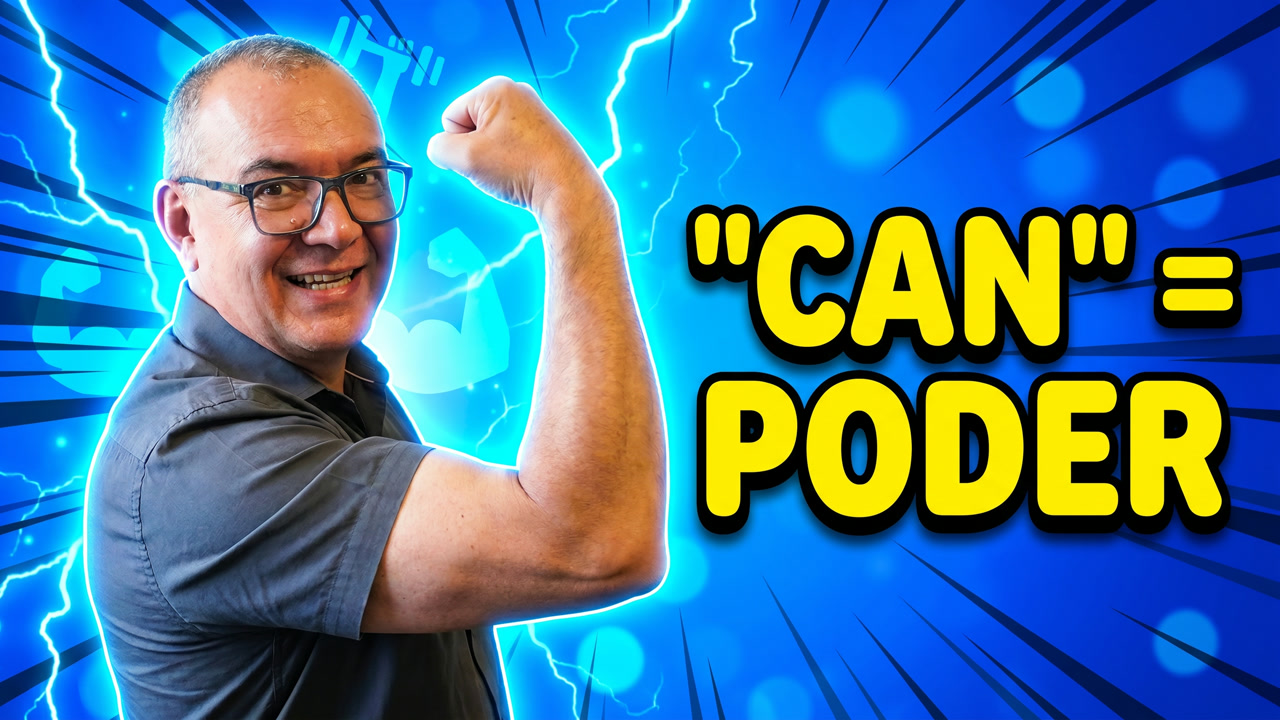
1. Poder conjugation. The verb behind "can": puedo, puedes, puede, podemos, podéis, pueden. ¿Puedo ayudarte? (Can I help you?) Ability, permission and requests all start here, so this lesson is the foundation for everything below.
2. Could in Spanish. "Could" is poder in a different tense. Past ability is the imperfect, podía (no podía dormir — I couldn't sleep); polite requests and possibility are the conditional, podría (¿podría ayudarme? — could you help me?). One verb, two tenses, two meanings.
3. May in Spanish. For permission, poder again: ¿Puedo pasar? (May I come in?) For possibility, the phrase puede que + subjunctive: Puede que llueva. (It may rain.) This is where the subjunctive first shows up in the modal family.
4. Might in Spanish. Uncertainty lives in three little words, quizás, tal vez and puede que: Tal vez vaya. (I might go.) The lesson shows when the verb after them takes the indicative and when it takes the subjunctive.
5. Should in Spanish. Deber in the conditional, debería: Deberías descansar. (You should rest.) The verb of advice, and the softest form of obligation.
6. Must in Spanish. Tener que and deber in the present: Tengo que trabajar. (I have to work.) Debes llegar a tiempo. (You must arrive on time.) The lesson compares strong and soft obligation so you never sound harsher, or weaker, than you mean to.
Because "could," "should" and "would" all ride on the conditional, the Spanish tenses hub is the natural companion to this one. And if puedo and tengo are not yet automatic, spend a week with the Spanish verb conjugation hub first; the modals build directly on those two verbs.
| Lesson | Form / formula | Example | Use it when… |
|---|---|---|---|
| Poder conjugation | puedo, puedes, puede… + infinitive | Puedo nadar. — I can swim. | ability or permission in the present |
| Could in Spanish | podía (past) · podría (polite / possible) | ¿Podrías repetir? — Could you repeat that? | past ability, polite requests, possibility |
| May in Spanish | ¿puedo…? · puede que + subjunctive | Puede que llegue tarde. — I may arrive late. | asking permission, stating a possibility |
| Might in Spanish | quizás / tal vez / puede que + verb | Quizás vayamos mañana. — We might go tomorrow. | uncertainty, "maybe," tentative plans |
| Should in Spanish | debería + infinitive | Deberías dormir más. — You should sleep more. | advice and gentle recommendations |
| Must in Spanish | tener que / deber + infinitive | Tengo que estudiar. — I have to study. | obligation, rules, necessity |
Study the modals in pairs, not in isolation: can and could, may and might, should and must. Each pair shares a verb and differs only in tense or strength, so the second half of the pair is half learned before you open the lesson. Write one request, one piece of advice and one obligation from your own week, and say them out loud until they sound like you.